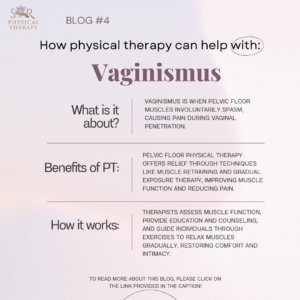
Vaginismus: Vaginismus is a distressing condition characterized by involuntary muscle spasms in the pelvic floor muscles, leading to pain and difficulty with vaginal penetration. It can have profound physical and emotional effects, impacting sexual intimacy and overall quality of life. Pelvic floor physical therapy offers compassionate care and effective treatment options for individuals experiencing vaginismus.
1. Comprehensive Assessment: Our pelvic floor physical therapists conduct a thorough assessment to understand the underlying factors contributing to vaginismus. This may include a detailed medical history review, assessment of pelvic floor muscle function, evaluation of psychological factors, and examination of pelvic alignment and muscle tension.
2. Muscle Retraining: Vaginismus is often associated with heightened muscle tension and spasms in the pelvic floor muscles. Our therapists employ specialized techniques to address these muscle imbalances and promote relaxation. This may include gentle manual therapy to release tight muscles, biofeedback training to enhance awareness and control of pelvic floor muscles, and progressive relaxation exercises to reduce muscle tension.
Example: Through gradual desensitization techniques, individuals with vaginismus can learn to overcome muscle spasms and discomfort associated with vaginal penetration. This may involve starting with non-threatening activities, such as pelvic floor relaxation exercises and external genital massage, before progressing to more challenging tasks, such as vaginal dilator therapy.
3. Education and Counseling: Understanding the physiological and psychological aspects of vaginismus is essential for effective management. Our therapists provide education on pelvic anatomy, sexual health, and relaxation techniques to empower individuals to take an active role in their treatment. Additionally, counseling and emotional support are offered to address any fears, anxieties, or misconceptions surrounding sexuality and intimacy.
Example: We may work with individuals to challenge negative beliefs or perceptions about their bodies and sexuality, promoting a more positive and empowered mindset. By fostering open communication and trust, we create a safe and supportive environment for individuals to explore their feelings and experiences related to vaginismus.
4. Gradual Exposure Therapy: Gradual exposure to vaginal penetration is a key component of treatment for vaginismus. Our therapists guide individuals through a structured program of gradual exposure therapy, starting with non-threatening activities and gradually progressing to more challenging tasks. This approach allows individuals to gradually desensitize themselves to vaginal penetration and build confidence in their ability to control their pelvic floor muscles.
Example: Using a step-by-step approach, individuals may begin by practicing relaxation techniques and pelvic floor exercises in a comfortable and supportive environment. As they gain confidence and mastery over their pelvic floor muscles, they can gradually introduce vaginal dilators of increasing size, learning to relax their muscles and accommodate penetration without pain.
5. Multidisciplinary Collaboration: Addressing vaginismus may require a multidisciplinary approach involving collaboration with other healthcare providers, such as gynecologists, psychologists, and sex therapists. Our therapists work closely with these professionals to ensure comprehensive care tailored to individual needs, addressing both physical and psychological aspects of vaginismus.
Pelvic floor physical therapy offers hope and healing for individuals with vaginismus, providing effective strategies to overcome muscle spasms, reduce pain, and restore sexual function and intimacy. Through personalized treatment plans and compassionate care, we empower individuals